

Natural Hairline Design with FUE in Islamabad at Glamorous
A hairline is the most scrutinized feature of the upper face, and the most unforgiving when it is designed poorly. Too low, too straight, or too dense at the front, and even a technically successful transplant announces itself. Too conservative, and the patient is left wondering why the change feels so modest. Those researching FUE Hair Transplant in Islamabad are often surprised to learn that the harvesting method is only one part of the outcome, while the design of the hairline determines whether the result looks like nature or like surgery.
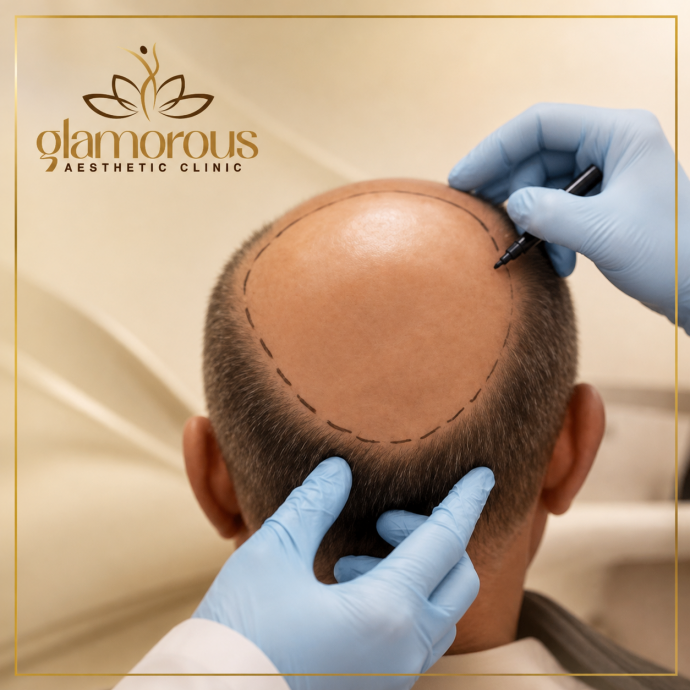
What FUE Actually Involves?
Follicular unit extraction is a hair restoration technique in which individual follicular units are removed one at a time from a donor area, usually the back and sides of the scalp. A fine punch tool, typically less than a millimeter in diameter, isolates each unit, which naturally contains one to four hairs. These grafts are then implanted into the thinning or bald area in a pattern chosen by the surgeon.Because no strip of scalp is removed, there is no linear scar. The donor area heals with tiny dot-like marks that are usually hidden even by short haircuts. This makes the method popular among people who prefer to keep their hair short or who want a faster return to routine activity.
Why Hairline Design Is the Heart of the Procedure?
A transplant can deliver impressive density and still look artificial if the hairline lacks character. Natural hairlines are irregular. They contain subtle asymmetries, soft transitions, and tiny clusters of single hairs that blend skin into hair almost imperceptibly. Reproducing these qualities requires artisticjudgment as much as technical skill.Surgeons who treat design as an afterthought tend to produce hairlines that are too straight, too sharp, or too dense. The goal is never perfection. The goal is believability, a hairline that looks as though it has always been there.
Principles of a Natural Hairline
Several principles guide experienced surgeons when designing the frontal line.
Position and Proportion
The hairline should sit at a height that suits the proportions of the face, including forehead size, brow position, and overall facial structure. A common guide measures a short distance above the highest forehead crease, though every face requires adjustment. Setting the line too low may look pleasing in the early months but can appear unnatural with age.
Shape and Irregularity
The frontal edge should not be a ruler-straight line. A gentle curve, slight temporal recession, and small irregularities create a convincing appearance. Male hairlines typically form a softly rounded or slightly M-shaped contour, while female hairlines tend to be rounder and lower.
Graft Selection and Placement
The most delicate zone is the very front edge, where single-hair grafts are placed to produce a soft, feathered border. Behind this zone, grafts with two or three hairs add density and fullness. Using the wrong grafts at the front is one of the most common causes of an obvious result.
Angle and Direction
Every hair has a natural angle, and hairs in different zones grow in different directions. Frontal hairs point forward and slightly downward, while those at the temples sweep sideways. Matching these angles prevents the stiff, doll-like look associated with poorly executed work.
Planning for the Long Term
Hair loss is often progressive. A hairline that looks ideal at twenty-five may appear out of place at forty-five if surrounding hair continues to thin. This is why responsible surgeons design for the future, not just the present.Donor hair is a limited resource, and every graft used today is unavailable tomorrow. A thoughtful plan balances frontal coverage with the need to preserve donor supply for later sessions, and it often recommends medical treatment to slow ongoing loss in untreated areas.
The Consultation Process
A proper consultation begins with a detailed discussion of your goals, hair loss history, family background, medical conditions, and medications. The surgeon examines the scalp, measures donor density, and evaluates hair caliber, texture, and color, because these characteristics influence the visual density achievable.You should also receive an honest assessment of what is realistic. This includes how many grafts may be needed, whether one session is enough, and whether another treatment should come first. A clinic that promises unlimited density or skips the examination is not prioritizing your outcome.
Who Is a Suitable Candidate?
Suitable candidates generally have stable, healthy donor hair, a clear pattern of permanent hair loss, and realistic expectations. Men with receding hairlines or thinning crowns are common candidates, and some women with localized thinning also benefit.Very young patients may be advised to wait, since their hair loss pattern may not yet be predictable. People with active scalp conditions, uncontrolled medical issues, or insufficient donor hair may need alternative approaches. Careful screening is a sign of quality care.
The Procedure Day
The treatment is performed under local anesthesia, so the scalp is numbed and discomfort stays minimal. The donor area is trimmed, and the grafts are extracted individually. Depending on the number of grafts, the session may take many hours, often with breaks for rest and food.After extraction, grafts are sorted by the number of hairs and kept in a protective solution. The surgeon or trained team then creates recipient sites at carefully planned angles and implants each graft. This stage is where the hairline design becomes reality, which is why the surgeon’s direct involvement matters.
Recovery and Growth Timeline
During the first days, mild swelling, redness, and small scabs are normal. Most of these settle within one to two weeks when aftercare instructions arefollowed. Around the second to fourth week, transplanted hairs commonly shed, which is a normal stage and not a failure.New growth usually begins around the third or fourth month, starting fine and gradually thickening. Noticeable improvement appears by six to nine months, and the final result often matures between twelve and eighteen months. Patience is essential, because the hairline continues to improve long after the procedure.
Aftercare That Protects Your Results
Avoid scratching or rubbing the treated area, and sleep with your head slightly elevated for the first few nights. Protect the scalp from direct sun, avoid strenuous exercise until your surgeon approves, and wash the hair as instructed. Smoking slows healing and reduces graft survival, so avoiding it is strongly advised. Balanced nutrition and good hydration also support healthy growth.
Risks and Limitations
FUE is generally safe when performed by trained professionals, but risks exist. These include swelling, temporary numbness, infection, folliculitis, uneven density, and poor graft survival. Overharvesting from the donor area can cause visible thinning, which is another reason for careful planning.It is also important to understand the limitations. FUE cannot create unlimited hair, and it does not stop natural hair loss elsewhere on the scalp. Results depend on donor quality, surgical technique, and healing response.
Alternatives to Consider
Not everyone needs surgery. Topical minoxidil and oral medications prescribed by a doctor can slow loss and improve density in suitable patients. Platelet-rich plasma therapy may support scalp health, and low-level light therapy is another option for early thinning. Strip harvesting, known as FUT, may be appropriate for people who need a large number of grafts and prefer to keep longer hair. A good surgeon explains each option honestly.
Choosing the Right Surgeon and Clinic
Look for qualified professionals with specific experience in hairline design, not just extraction. Review before-and-after photographs taken in consistent lighting, paying attention to the front edge and temples, since these areas reveal the quality of the work. Ask who performs each stage of the procedure, how many grafts are realistic, and what follow-up care is included.Be cautious of extremely low prices, guaranteed density, or pressure to decide quickly. Quality hair restoration requires time, skill, and proper equipment.
Final Thoughts
A natural hairline is the product of careful assessment, thoughtful design, and disciplined surgical execution. FUE offers a refined way to harvest donor hair without a linear scar, yet the artistry of planning the shape, density, and direction of the frontal line is what separates a convincing result from an obvious one. Patients who approach the process with realistic expectations, choose an experienced surgeon, and commit to aftercare give themselves the best chance of an outcome that looks effortless. Take time to consult, ask detailed questions, and think about the long-term picture of your hair loss. With sound planning and patience, a well-designed hairline can restore not only your appearance but also your confidence for many years to come.For anyone considering FUE Hair Transplant in Islamabad, the best first step is a professional consultation that offers honest guidance and a personalized plan. Contact us at our website https://www.glamorousclinic.com.pk/ to begin that conversation and take a confident step toward restoring natural-looking hair.