

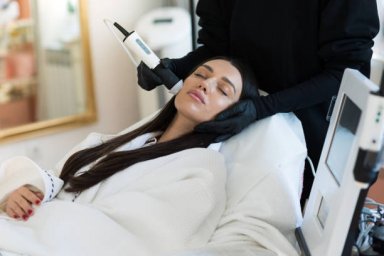
Clogged pores develop when oil, dead skin cells and other material accumulate around the opening of a follicle. HydraFacial Treatment in Dubaican address the surface contributors to pore congestion through a combination of cleansing, controlled exfoliation, extraction and hydration, making it particularly relevant for skin that looks congested or uneven.
However, clogged pores are not simply a problem of “dirty skin.” Blackheads and whiteheads are forms of comedonal acne, and persistent or inflammatory acne may require a dedicated dermatological treatment plan rather than a facial alone.
How Clogged Pores Develop
Understanding the anatomy of a clogged pore helps explain why professional cleansing can improve its appearance without permanently changing the pore itself.
Oil and Dead Skin Cells Accumulate
A pore can become blocked when excess sebum combines with dead skin cells. The resulting material can form either an open comedone, commonly called a blackhead, or a closed comedone, commonly called a whitehead.
This is why simply washing the face harder does not necessarily solve congestion.
Blackheads Are Not Dirt
The dark appearance of a blackhead is not caused by surface dirt. The material inside an open pore undergoes a chemical reaction with oxygen, producing the characteristic dark appearance.
Aggressive scrubbing can therefore irritate the skin without addressing the underlying process.
Pore Visibility Can Increase With Congestion
When pores contain excess oil and debris, their openings can look more noticeable. The American Academy of Dermatology notes that clogged pores and oily skin can make pores appear larger.
How HydraFacial Treatment in Dubai Approaches Pore Congestion
HydraFacial uses a structured treatment sequence involving cleansing, exfoliation, extraction and hydration. The manufacturer describes the system as customizable according to individual skin concerns.
Cleansing Removes Surface Impurities
The first stage prepares the skin by removing surface buildup and impurities.
This does not mean the treatment “detoxes” the skin. Rather, it creates a cleaner surface so subsequent treatment stages can work more effectively.
Controlled Exfoliation Loosens Surface Buildup
Exfoliation removes dead cells from the outermost layer of the skin.
For congested skin, controlled exfoliation can help reduce some of the surface material contributing to roughness and blocked-looking pores.
The intensity matters. The American Academy of Dermatology recommends matching exfoliation to skin type and warns that excessive exfoliation can cause irritation.
Extraction Targets Superficial Congestion
HydraFacial's treatment process includes a dedicated extraction stage intended to remove pore impurities.
This can be useful for superficial congestion, particularly around areas such as the nose, chin and forehead.
Extraction should remain controlled rather than becoming an aggressive attempt to empty every visible pore.
Hydration Completes the Surface Treatment
After cleansing and extraction, hydration helps reduce the dry or tight feeling that can accompany exfoliation.
This is important because treating congestion should not mean leaving the skin stripped or uncomfortable.
Different Types of Pore Congestion Need Different Approaches
Not every visible bump is the same.
Blackheads
Blackheads are open comedones containing accumulated material within an open follicle.
A professional facial may improve their appearance through cleansing and extraction, but blackheads can recur because sebum production and follicular cell turnover continue.
Whiteheads
Whiteheads are closed comedones. Because the pore opening is closed, they may not respond to extraction in the same way as superficial blackheads.
Persistent whiteheads may require acne-specific treatment.
Enlarged-Looking Pores
A visible pore is not something that can simply be erased or permanently “shrunk” through one facial.
The goal is to reduce factors that make pores look more prominent, such as congestion, surface buildup and excessive oiliness. The AAD recommends gentle cleansing, non-comedogenic products and appropriate exfoliation as part of pore-focused skincare.
Where Congestion Commonly Appears
Nose
The nose often develops visible blackheads or sebaceous filaments, making it one of the areas patients notice first.
Not every small dark point on the nose is necessarily a blackhead. Sebaceous filaments are normal structures associated with the follicle and can become more visible when sebum production is higher.
Chin
The chin can develop both clogged pores and acne lesions. Repeated touching or aggressive extraction can increase irritation.
Forehead
Forehead congestion can sometimes be influenced by skincare or hair products. The AAD notes that oily hair products can contribute to small bumps and clogged pores around the hairline and forehead.
T-Zone
The central face may produce more oil than the cheeks, making the T-zone a common area for visible congestion.
Why Aggressive Pore Extraction Is Not the Answer
It can be tempting to think that stronger extraction will produce cleaner skin.
Excessive Pressure Can Irritate Skin
Picking, squeezing and digging into pores can increase irritation. The AAD specifically advises against squeezing or picking because it can make pore visibility and acne worse.
Stronger Exfoliation Is Not Automatically Better
The AAD recommends adjusting exfoliation according to skin type and warns that overly aggressive exfoliation can damage the skin barrier or trigger irritation.
A professional treatment should therefore focus on controlled improvement rather than maximum intensity.
Customizing Treatment for Congested Skin
Not every patient with clogged pores should receive the same protocol.
Oily and Thickened Skin
Some patients with oilier, more resilient skin may tolerate a different exfoliation approach from someone with dry or reactive skin.
HydraFacial provides different HydroPeel options designed around different treatment needs.
Dry or Sensitive Skin
If the skin is already dry or sensitive, excessive exfoliation can make the condition worse.
A gentler approach may be more appropriate, with greater emphasis on maintaining hydration.
Combination Skin
When the T-zone is congested but the cheeks are dry, treatment should account for both concerns rather than treating the entire face identically.
HydraFacial and Acne-Prone Skin
Clogged pores can be associated with acne, but a facial should not be confused with comprehensive acne treatment.
Mild Comedonal Congestion
For patients primarily concerned with superficial blackheads or congestion, cleansing, exfoliation and extraction may form part of a broader skincare strategy.
Persistent Acne
If a patient has frequent inflammatory pimples, painful nodules or cysts, professional dermatological assessment may be more appropriate.
The AAD explains that acne treatment should be selected according to the type and severity of the acne, with dermatological care particularly important for deep or painful lesions.
Long-Term Pore Management
Pores continue to produce sebum and shed skin cells after a facial. Maintaining results therefore depends on consistent skincare.
The AAD recommends non-comedogenic products and gentle cleansing for people concerned about clogged pores.
What to Avoid Before Treatment
Patients should tell their provider about active skincare products, recent procedures and current irritation.
Retinoids and Exfoliating Products
Retinol and prescription retinoids can increase skin sensitivity. Exfoliating while using sensitizing products may increase irritation.
Sunburn or Damaged Skin
Exfoliation should not be performed over sunburned skin or open wounds.
DIY Extraction
Squeezing blackheads or digging into pores before an appointment can create unnecessary inflammation.
It is better to allow the provider to assess the skin as it is.
Maintaining Cleaner-Looking Pores After Treatment
The treatment itself is only one part of pore management.
Use Non-Comedogenic Products
The AAD recommends looking for labels such as “non-comedogenic” or “oil-free” when choosing skincare and makeup for clogged or acne-prone skin.
Avoid Overwashing
Oily skin still needs a healthy moisture balance. The AAD recommends gentle cleansing rather than harsh scrubbing or overly aggressive cleansing.
Protect Against UV Exposure
Broad-spectrum SPF 30 or higher can help protect against cumulative sun damage that can contribute to changes in skin texture and pore visibility.
When a Facial Is Not Enough
A facial can address certain surface aspects of congestion, but it should not delay appropriate medical treatment.
Persistent acne, deep painful lesions, scarring, significant inflammation or recurrent congestion may require a dermatologist-led plan.
The AAD's acne guidance emphasizes that different types of acne require different treatments and that persistent or more severe disease may need professional medical management.
A More Practical Approach to Clogged Pores
Clogged pores respond better to controlled management than aggressive cleaning.
HydraFacial Treatment in Dubaican support clearer-looking skin by combining cleansing, exfoliation, extraction and hydration, particularly when superficial congestion is the main concern. It does not permanently change pore size or prevent future congestion on its own.
For a personalized assessment, explore HydraFacial Treatment in Dubai at Tajmeels Clinic.
For the clinic's complete range of aesthetic treatments, visit Tajmeels Clinic.